Guest Lecture by Prof. Arun Thiruvengadam on Constitutional Interpretation
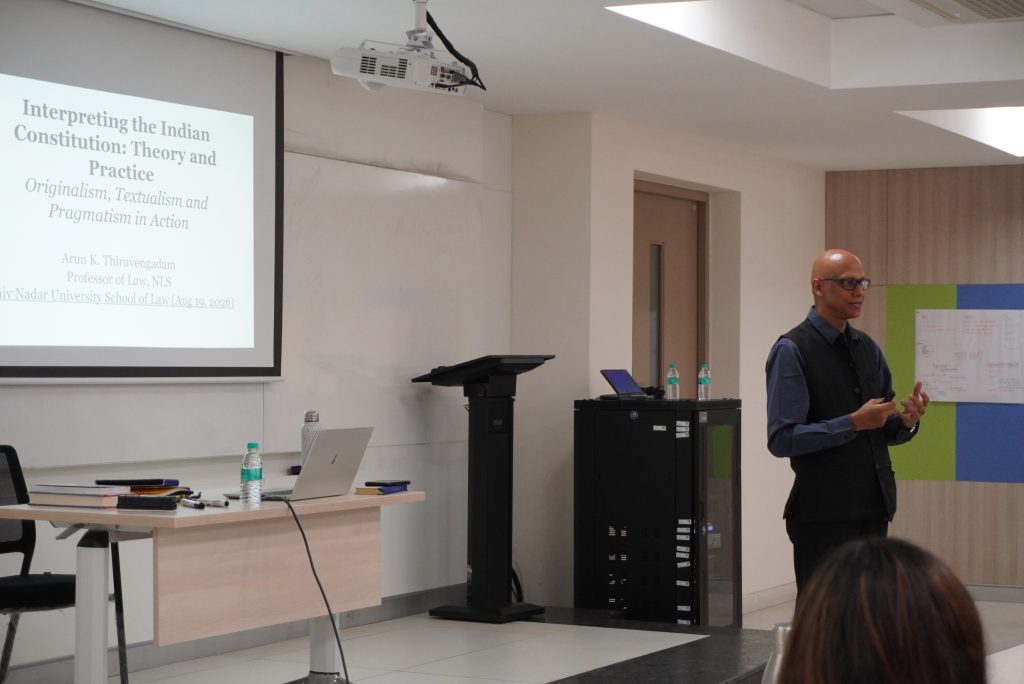
On 19th August 2026, Prof. (Dr.) Arun K. Thiruvengadam addressed second-year and third-year students at the Shiv Nadar School of Law on “Interpreting the Indian Constitution: Theory and Practice: Originalism, Textualism and Pragmatism in Action.”
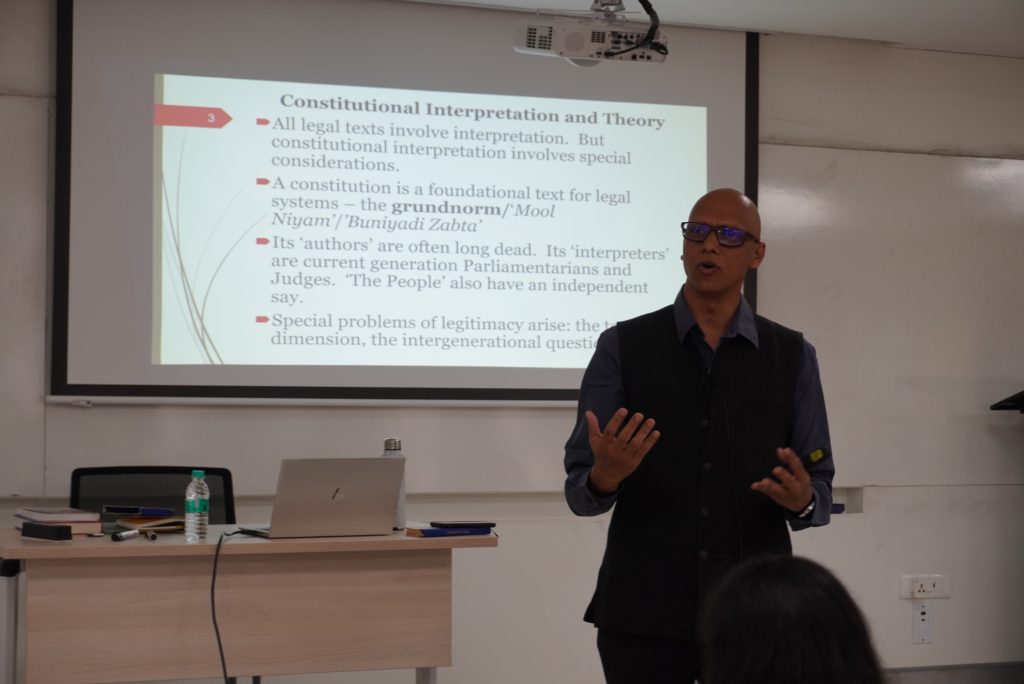
Prof. Thiruvengadam’s lecture situated the theory of constitutional interpretation in the context of the Scalia-Breyer debate, using extracts from the judges’ books to point out their different approaches to interpretation, i.e., textualist/originalist and pragmatist, respectively. He then discussed four provisions from the Indian Constitution which pertained to interpretive difficulties. Bridging American theories of interpretation and Indian practice, Prof. Thiruvengadam finally characterized Indian judges’ reasoning in the three Judges cases, Sankari Prasad Singh Deo v. Union of India (1951), and Balaji Raghavan v. Union of India (1995).
An important theme of the lecture was the legitimacy of judges in interpreting the Constitution. Prof. Thiruvengadam pointed out two complicating factors: the temporal dimension, which lets our constitutional founders bind us with the “dead hand of the past”, and the intergenerational question, regarding the disenfranchised and unborn citizens.
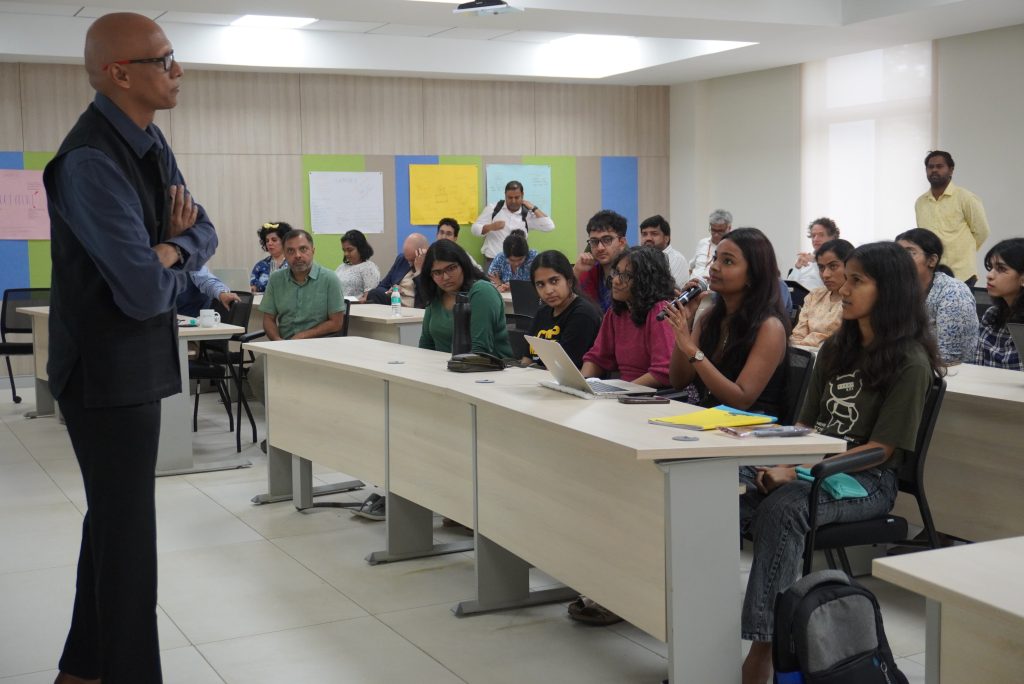
Prof. Thiruvengadam concluded that theory could be used for consistency in interpretation and that the task of interpretation must be approached with care, circumspection, and humility. The lecture was followed by a question-and-answer session. The best question badge went to Tejal Mohaanty for questioning the authority of judges in interpreting the Constitution in light of their social unrepresentativeness. Other questions led to an interesting discussion of rooted cosmopolitanism by judges.
(This report was prepared by Lavanya Sunder. Photos courtesy Ritika Narayanan)